How to Get Cited by ChatGPT & Perplexity: A Guide to LLM Source Optimization
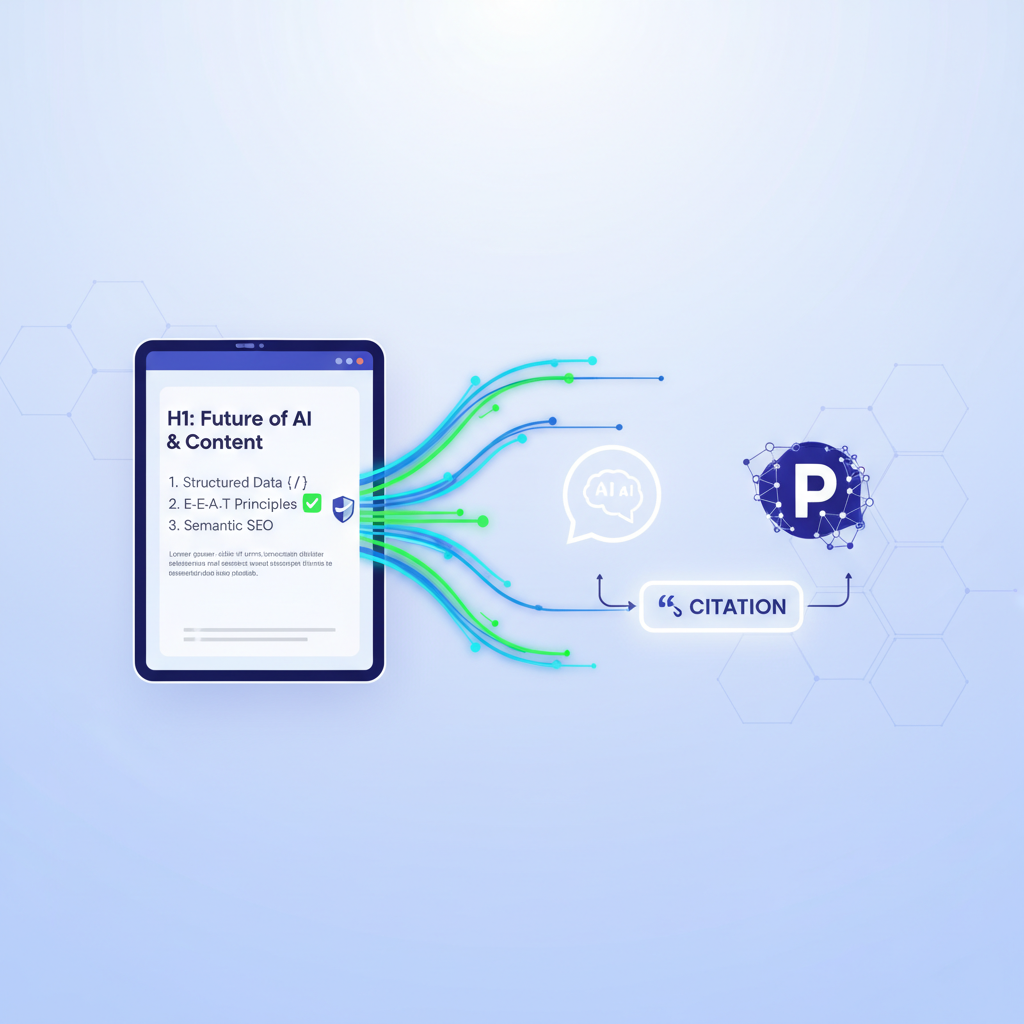
Master LLM source optimization to get your content cited by AI models like ChatGPT and Perplexity. Learn to structure for extractability, enhance E-E-A-T, leverage schema, and track AI visibility to establish your brand as an authoritative source.

LLM Source Selection: Beyond Traditional Search
Large Language Models (LLMs) such as ChatGPT and Perplexity are redefining how users discover information. This shift makes "LLM Source Optimization" — also known as LLM SEO or Generative Engine Optimization (GEO) — critical for content creators. The objective is not merely to rank in traditional search results but to be cited directly in AI-generated answers, which enhances visibility, credibility, and referral traffic.
LLMs process information by retrieving relevant content, then synthesizing, comparing, and citing passages that are most relevant, trustworthy, and easy to quote. This involves explicit "answer extraction" and "evidence selection." Understanding this process is key to becoming a preferred source for AI systems.
The Foundational Principles of LLM Citation
To increase the likelihood of your content being cited by LLMs, focus on these core principles:
- Clarity and Structure: LLMs favor content that is easy to scan, parse, and extract information from. This includes logical flow and consistent formatting.
- Factual Accuracy and Verifiability: AI models prioritize content that is verifiable, supported by evidence, and factually correct to reduce hallucinations.
- Authority and Trustworthiness (E-E-A-T): Demonstrating Experience, Expertise, Authoritativeness, and Trustworthiness is paramount. LLMs assess credibility through various on-page and off-page signals.
- Originality and Depth: Unique insights, original research, and comprehensive coverage of specific topics are highly valued, positioning your content as a canonical reference.
- Accessibility and Freshness: Content must be technically accessible to crawlers, and up-to-date information is preferred, particularly for dynamic topics.
Content Structuring for AI Extractability
The way your content is structured profoundly impacts its extractability by LLMs. Optimize for immediate answers and clear segmentation:
- Answer-First Format: Begin sections or pages with a direct, concise answer (typically 40-75 words) to the primary question. This provides LLMs with a readily citable snippet.
- Clear Headings: Use a logical hierarchy of H1, H2, and H3 headings. Ensure each heading accurately reflects its section's content and can be framed as a question a user might ask.
- Concise Paragraphs: Keep paragraphs short, ideally 2-3 sentences (35-45 words). This improves readability for both human users and AI models, making extraction more precise.
- Lists and Tables: Utilize bullet points, numbered lists, and tables to summarize information, present data, and segment ideas clearly. These formats are highly digestible for AI systems.
Building Trust: E-E-A-T & Factual Verification
LLMs prioritize credible sources. Enhance your content's trustworthiness through explicit E-E-A-T signals and verifiable data:
- Demonstrate E-E-A-T: Include clear author bios with relevant credentials, experience, and qualifications. Add publication or "last updated" dates to signal freshness. Reference reputable external domains (e.g., .gov, .edu) to build topical trust and provide external validation.
- Provide Verifiable Data: Use statistics, data, and primary sources. Cite studies, research papers, government reports, and verified industry reports. Explicitly note your methodology in a sentence or two for original data to help AI models assess reliability.
- Original and Unique Content: Publish original research, proprietary data, unique insights, and comprehensive guides that address knowledge gaps. Content that provides a novel perspective or fills an information void is more likely to become a "canonical" reference for LLMs.
The Role of Structured Data (Schema Markup)
Implement relevant Schema.org or JSON-LD markup to provide explicit signals to LLMs about your content's meaning and purpose. This is a machine-readable layer that aids comprehension and citation:
- Specific Schema Types: Utilize
FAQPage,HowTo,Article,Organization, andAuthorschema where appropriate. - Metadata Enrichment: Ensure your schema includes enriched fields such as
author,dateModified,headline, andimageto provide comprehensive context. - Validation: Regularly validate your structured data to ensure it is correctly implemented and free of errors, supporting proper interpretation by AI systems.
Technical Readiness for AI Crawlers
Technical optimization ensures your content is accessible and easily processed by AI models. Without it, even high-quality content can be overlooked:
- Clean HTML Structure: Ensure your website has a clean and semantic HTML structure that allows for efficient parsing.
- Fast Loading Times: Page speed is critical. LLMs often prefer fast-loading pages as part of their retrieval process.
- Technical Accessibility: Remove barriers such as paywalls,
nofollowtags on internal links within citable content, or blocked assets that prevent AI assistants from fully accessing and verifying your page. For platforms like Perplexity, server-side rendering is important, as client-side JavaScript can sometimes hinder crawling.
Nuances: ChatGPT vs. Perplexity AI
While many optimization strategies are universal, there are distinctions between how different LLMs approach source selection:
- Perplexity AI: Operates as an "answer engine," synthesizing information from multiple sources (typically 3-8 per response). It prioritizes verifiable, well-structured content and shows a significant preference for community-driven content like Reddit (46.7% of top citations), YouTube (13.9%), and Yelp (5.8%) for certain queries. Perplexity values visible, concise facts and fast-loading pages, often favoring content with question headlines and answer-first sentences.
- ChatGPT: When citing (especially versions with Browse capabilities), ChatGPT also values trustworthiness and credibility, often providing direct links. Its source selection can be influenced by the authority and historical relevance of information in its training data, though it may also integrate real-time search results. Older versions without direct web access could "hallucinate" citations, emphasizing the need for robust, verifiable content to guide its responses.
The Audit Process
- Fetch: Use a tool to download your page as raw text (stripping HTML).
- Analyze: Feed that text into Gemini Pro or GPT-4.
- Prompt: Ask the model, "Extract the pricing tier for Enterprise users." If it hallucinates or fails, your content is broken.
This failure occurs because the LLM struggles to identify and extract specific, factual entities from your content, indicating a loss of AI citation potential due to poor content structure or implicit assumptions. GenRankEngine validates this problem by simulating how LLMs interpret your site's content, identifying precise instances where critical information is either un-extractable, misunderstood, or distorted by the model, directly revealing where your LLM visibility and interpretation signals are failing.
Final Insight: Why This Matters Now
In the current AI-driven information ecosystem, LLMs are not just search assistants; they are becoming primary arbiters of truth and discovery. A practical failure mode occurs when LLMs misinterpret core product features or pricing, leading to hallucinated information in AI-generated answers. For instance, if your SaaS product's pricing page is convoluted, an LLM might state an incorrect tier, crediting your competitor for a similar, more clearly presented feature set, resulting in lost brand visibility and misinformed users. This means your brand could be losing valuable mindshare and potential conversions, not because of poor SEO in the traditional sense, but because your content is not designed for AI comprehension and accurate citation. The risk is concrete: a misrepresentation by an AI can undermine trust and divert high-intent users away from your offerings.
A proactively optimized site ensures your key information is correctly identified and cited by AI. Don't let AI misunderstand your value. Take the first step towards ensuring AI accurately represents your brand.
Check Your Perplexity Citation Rank
See if Perplexity mentions and cites your website. Get your exact citation rank for any category in seconds.
Check My Perplexity Rank →Run a free GenRankEngine visibility scan today.
Conclusion
The shift towards AI-powered search means that success now hinges on how effectively your content communicates with Large Language Models. AI systems now significantly influence discovery, perception, and decisions, making LLM source optimization a strategic imperative. Your content's clarity, structure, factual accuracy, and technical readiness directly impact its ability to earn valuable citations from AI platforms.
GenRankEngine provides the necessary diagnostic capabilities to understand how AI interprets your site, measure your visibility inside these AI systems, and detect precisely where meaning is lost or distorted.
Ready to see how AI understands your site? Run a free GenRankEngine visibility scan today.
Sources
- https://theneocore.com/generative-engine-optimization-geo-a-primer/
- https://theneocore.com/geo-vs-seo-vs-aeo-whats-the-difference/
- https://developers.google.com/search/docs/appearance/structured-data/article
- https://moz.com/learn/seo/google-eat
- https://theneocore.com/5-on-page-seo-tweaks-you-can-implement-today-for-better-rankings/
- https://perplexity.ai/
- https://chat.openai.com/
- https://eflot.com/blog/llms-citation
- https://getmorphic.com/blog/how-chatgpt-chooses-websites-to-cite
- https://www.prorealtech.com/llm-seeding/
- https://www.techmagnate.com/blog/llm-citation-guide/
- https://www.gtechme.com/insights/the-ultimate-guide-to-seo-with-large-language-models-llms/
- https://www.averi.ai/blog/building-citation-worthy-content-making-your-brand-a-data-source-for-llms
- https://www.rankshift.ai/blog/how-to-get-cited-as-a-source-in-perplexity-ai
- https://trakkr.ai
- https://lead-spot.net/blog/optimizing-content-for-llms/
- https://vercel.com/blog/how-were-adapting-seo-for-llms-and-ai-search
- https://rankprompt.com
- https://intercore.net/ai-search/how-to-get-cited-by-perplexity-ai/
- https://genezio.com/glossary/chat-gpt-citations
- https://myjotbot.com/blog/how-to-get-chatgpt-to-cite-sources